A leaking washing machine can quickly turn a normal laundry day into a stressful situation. Whether you notice water pooling around your washer, dripping from the door, or leaking from underneath the machine, identifying the cause early can help prevent water damage and costly repairs.
If you are experiencing washer leaks at home, understanding the common causes can help you determine whether a simple check is enough or professional assistance is needed. ProTech Appliances Repairs provides dependable appliance repair solutions to help homeowners keep their household appliances working properly.
In this guide, we will explain seven common reasons why washing machines leak water, what you can safely check, and when to contact a professional appliance repair technician in Springfield, VA.
1. Damaged or Worn-Out Door Seal
Front-loading washing machines have a rubber door seal that prevents water from escaping during the wash cycle. Over time, this seal can become cracked, loose, or damaged due to regular use.
Common signs:
- Water leaking from the front of the washer.
- Water collecting near the washing machine door.
- Visible cracks, tears, or mold on the rubber seal.
Solution: Inspect the rubber seal for visible damage and clean away any trapped dirt or detergent residue. If the seal is torn or no longer fits properly, it may need replacement by a qualified technician.
2. Loose or Damaged Water Supply Hoses
Water supply hoses carry water from your home’s plumbing system to the washing machine. Loose connections, worn-out rubber hoses, or damaged fittings can cause water to leak behind the appliance.
Common signs:
- Water pooling behind the washer.
- Dripping around the hose connections.
- Moisture near the water inlet.
Solution: Turn off the water supply before inspecting the hoses. If a connection is loose, it may need careful tightening according to the manufacturer’s instructions. Replace damaged hoses rather than attempting a temporary repair.
3. Clogged or Damaged Drain Hose
The drain hose removes wastewater from the washing machine. If it becomes blocked, cracked, disconnected, or incorrectly positioned, water may spill onto the floor during the drain cycle.
Common signs:
- Water leaking while the washer drains.
- Water backing up near the drainpipe.
- Water remaining inside the washing machine after a cycle.
Solution: Check the visible drain hose for kinks, disconnections, or damage. Make sure it is installed according to the manufacturer’s guidelines. A persistent blockage or damaged hose may require professional attention.
4. Too Much Detergent or the Wrong Detergent
Using excessive detergent can create too many suds, especially in high-efficiency washing machines. The excess foam can interfere with normal draining and may cause water or suds to escape from the appliance.
Common signs:
- Excessive foam during the wash cycle.
- Suds escaping from the door or detergent drawer.
- Residue left on clothes after washing.
Solution: Use the detergent type and quantity recommended by the washer manufacturer. High-efficiency machines generally require HE detergent. If the problem continues after correcting detergent use, the washer may need further inspection.
5. Clogged Detergent Dispenser
The detergent dispenser directs soap and other laundry products into the washing machine. Detergent buildup, fabric softener residue, or other obstructions can cause water to overflow from the dispenser area.
Common signs:
- Water dripping from the detergent drawer.
- Soap residue around the dispenser.
- Water leaking near the upper front portion of the machine.
Solution: If your manufacturer’s instructions permit, remove and clean the dispenser. Clear visible residue and allow the components to dry before reinstalling them. If water continues to overflow, there may be a blockage or another internal issue.
6. Damaged Drain Pump or Internal Hose
The drain pump helps move wastewater out of the washing machine. A damaged pump, worn seal, or loose internal hose can cause leaks underneath the appliance.
Common signs:
- Water collecting beneath the washer.
- Unusual noises during draining.
- The washer failing to drain properly.
Solution: Turn off the appliance and avoid operating it while it is leaking. Internal pump and hose repairs often require dismantling parts of the machine, so a qualified repair technician should inspect and replace faulty components.
7. Overloading the Washing Machine
Overloading the washer can interfere with proper operation and may cause excessive movement, splashing, or drainage problems. In some cases, repeated overloading can also contribute to wear on seals and other components.
Common signs:
- Water leaking during high-speed spinning.
- Excessive vibration or movement.
- Clothes remaining unusually wet after a cycle.
Solution: Remove excess laundry and follow the manufacturer’s recommended load capacity. Distribute clothes evenly inside the drum. If leaking or excessive vibration continues with a normal load, professional inspection may be necessary.
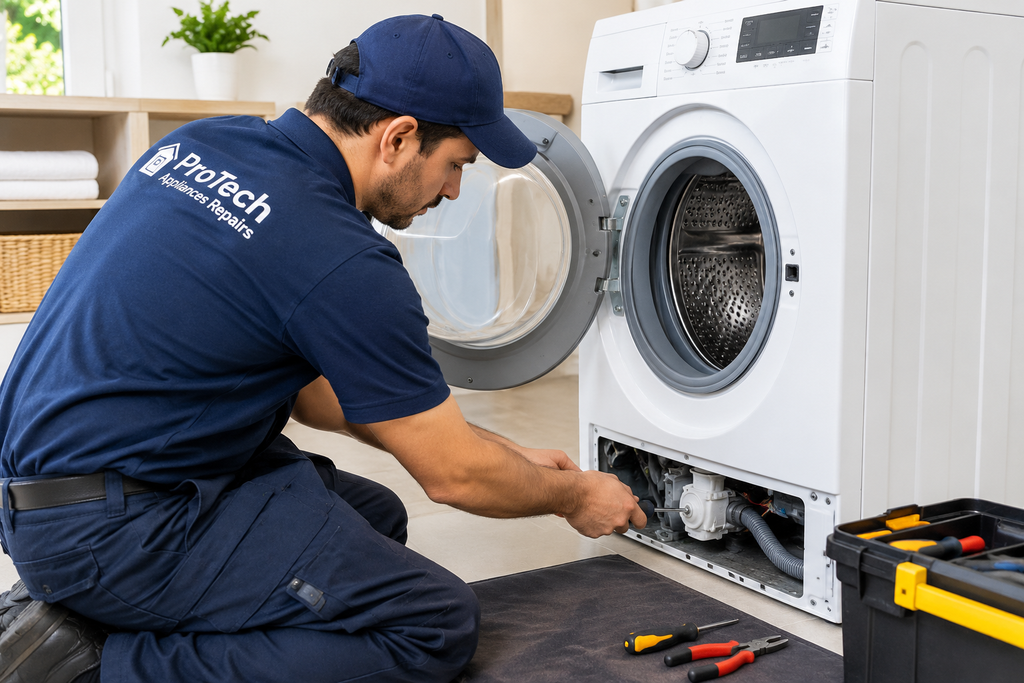
When Should You Call a Professional Appliance Repair Technician?
Some washer leaks can be resolved through basic maintenance, but persistent leaks may indicate a more serious mechanical or plumbing problem.
Consider professional assistance if:
- Water continues leaking after checking the visible hoses and seals.
- The washer leaks from underneath the cabinet.
- The machine makes unusual noises or fails to drain.
- Water appears near electrical connections.
- You notice repeated leaks during washing or spinning.
If water is near electrical components, do not touch the appliance or its plug while standing in water. Shut off the water supply if it is safe to do so, and disconnect power only from a dry, safe location. Contact a qualified professional when necessary.
Homeowners looking for reliable appliance repair should choose an experienced service provider who can identify the source of the leak and recommend the appropriate repair rather than replacing parts unnecessarily.
Need Help With Other Household Appliances?
Although a leaking washer requires prompt attention, other household appliances can develop problems that disrupt your daily routine.
ProTech Appliances Repairs also provides appliance repair services for homeowners looking for dependable solutions for common dryer issues.
If your dryer is not heating, taking too long to dry clothes, or making unusual noises, consider professional Dryer Repair in Springfield, VA. Homeowners in nearby communities can also explore Dryer Repair in Burke, VA, and Dryer Repair in Arlington, VA for assistance with common dryer problems.
Choosing affordable appliance repair can help you address appliance issues before they become more serious. The right repair solution depends on the appliance’s condition, the underlying fault, and the cost of replacement parts.
For safety, always follow the manufacturer’s instructions and avoid attempting electrical or complex internal repairs without the appropriate training.
Final Thoughts
A leaking washing machine should not be ignored. Damaged door seals, loose hoses, clogged dispensers, excess detergent, and drain pump problems are among the common causes of washer leaks.
Start by identifying when the leak occurs and checking only the components that can be inspected safely. If the problem persists, professional diagnosis can help prevent further water damage and restore normal operation.
For homeowners in Springfield, VA, ProTech Appliances Repairs can help you explore suitable appliance repair solutions and get your household back on track.
Frequently Asked Questions (FAQs)
1. Why is my washing machine leaking water from the bottom?
Water leaking from underneath the washer may be caused by a damaged drain pump, a loose internal hose, a worn seal, or a drainage issue.
Solution: Turn off the washer and water supply if safe. Check for visible external hose damage, but avoid opening the appliance. If the leak continues, arrange a professional inspection.
2. Can I still use my washing machine if it is leaking?
It is best to stop using a leaking washing machine until the cause has been identified. Continued operation may increase water damage and could create an electrical hazard.
Solution: Stop the cycle if safe, keep away from standing water near electrical components, and shut off the water supply if accessible safely. Have the washer inspected before using it again.
3. Why does my washer leak only during the spin cycle?
Leaks during spinning may be related to an overloaded drum, excessive vibration, a damaged door seal, or a problem with the drain system.
Solution: Once the machine is safe to access, reduce the load and distribute the clothes evenly. If leaking continues with a normal load, contact an appliance repair technician.
4. How much does washing machine leak repair cost in Springfield, VA?
The cost depends on the source of the leak, the replacement parts required, the washer model, and the labor involved. A simple hose repair may cost less than replacing a drain pump or repairing an internal component.
Solution: Request an estimate after the problem has been diagnosed. Ask whether the estimate includes labor, parts, and any applicable service or diagnostic fees.
5. How can I prevent my washing machine from leaking again?
Regular maintenance can reduce the likelihood of future leaks. Avoid overloading the drum, use the correct detergent, clean the dispenser, and inspect visible hoses and seals periodically.
Solution: Follow your washer manufacturer’s maintenance recommendations and address signs of wear promptly. If leaks return despite proper maintenance, arrange a professional inspection to identify the underlying cause.

John Cudel is an appliance repair specialist and content contributor at ProTech Appliance Repairs. With hands-on experience servicing refrigerators, washers, dryers, dishwashers, ovens, and other household appliances, he shares practical repair insights, troubleshooting tips, and maintenance advice to help homeowners keep their appliances running efficiently. John proudly serves customers throughout Alexandria, Arlington, Fairfax, Springfield, Burke, Newington, Woodbridge, Lake Ridge, Fort Belvoir, Laurel Hill, Lorton, and surrounding Northern Virginia communities.